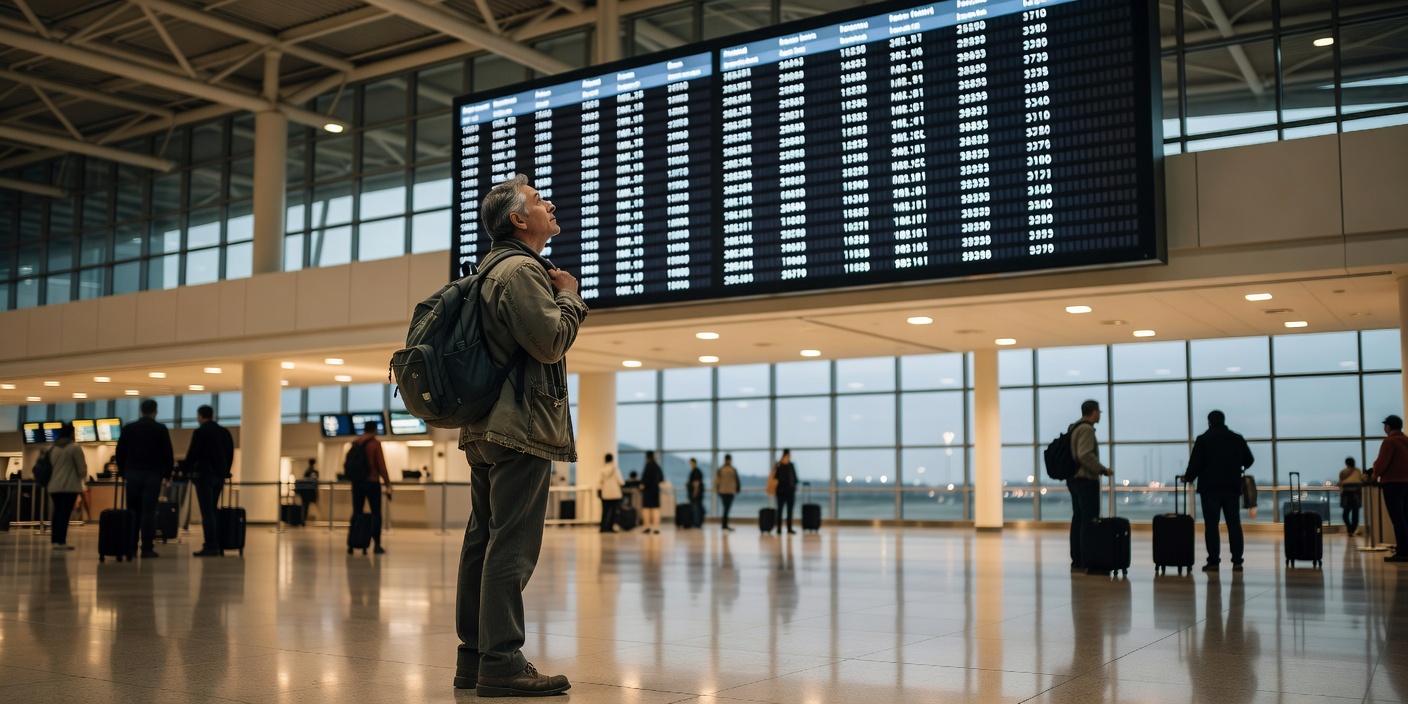
The Tarmac to Concourse Gap
Consider a typical arrival scenario into a European primary hub. Your flight touches down at 14:15. At an airport like Amsterdam Schiphol, landing on the notorious Polderbaan runway (Runway 18R/36L) can mean a 15- to 20-minute taxi back to the main terminal building alone.
Once docked at the jetbridge, deplaning a widebody aircraft takes another 10 to 15 minutes. If you are entering the Schengen area on a non-EU passport, passport control queues can fluctuate between ten minutes and an hour depending on international arrival volume. Add baggage reclaim, where container dollies must travel from outlying tarmac stands, and stepping into the public arrivals hall before 15:15 is an accomplishment.
How Live Flight Tracking Actually Operates
Professional airport transfer providers do not depend on scheduled flight timetables. When you provide your carrier flight number (e.g., BA308, LH1032, AF1140), the dispatch system connects directly with ADS-B transponder feeds and Eurocontrol aeronautical networks.
If your flight departs London Heathrow forty minutes late due to runway congestion, your driver in Munich does not leave for the terminal early to rack up parking charges. Their dispatch system recalculates estimated runway touchdown and adjusts the chauffeur's dispatch time accordingly.
The Golden Buffer Rule
For European domestic/Schengen flights with hand-luggage only, schedule your chauffeur pickup for 20 minutes after touchdown. For intercontinental long-haul flights with checked luggage and non-EU passport inspections, request a 45- to 60-minute post-touchdown pickup buffer.
Complimentary Waiting Windows Explained
Reputable transfer services offer a complimentary waiting window — typically between 45 and 60 minutes — starting from the moment the aircraft transponder registers on-ground arrival. This cushion handles customs bottlenecks, lost baggage reporting, or jetbridge technical faults without generating sudden overage penalties.
If you encounter unexpected delays at the passport desk or your checked baggage fails to appear on the carousel, reaching out to your driver via SMS or the concierge dispatch desk instantly extends your waiting buffer. Most dispatch systems can arrange extra driver time or reassign a secondary vehicle if border delays exceed normal limits.
Departures Planning: Working Backwards From Takeoff
While arrivals planning centers around passenger clearance, departure transfers demand conservative scheduling. European airports recommend arriving two hours early for short-haul intra-European flights and three hours early for intercontinental long-haul journeys.
When booking your pickup from a city-center hotel, work backwards:
- Intercontinental Departure Time: 16:00
- Target Terminal Check-in Time: 13:00 (3 hours prior)
- Estimated Highway Drive Duration: 45 minutes
- Rush-Hour Ring-Road Congestion Buffer: 30 minutes
- Recommended Hotel Lobby Departure: 11:45
Setting an 11:45 pickup rather than a rushed 12:30 departure ensures you sail through terminal drop-off zones without panic, leaving ample time to clear priority security lanes, process VAT tax-free refund stamps, and settle into the departure lounge.
Handling Unscheduled Diversions and Cancellations
Severe weather, air traffic control strikes, or mechanical issues occasionally divert flights to secondary diversion fields. When this happens, an informal rideshare app simply bills you as a no-show cancellation.
In contrast, established VIP transfer desks track live diversion alerts. If your flight is diverted or canceled before takeoff, our dispatch team cancels or reschedules the driver without penalty, holding your reservation in active status until your replacement itinerary is confirmed.